The Systems Behind Sustainable Business Growth (Not Burnout).
Sustainable business growth comes from systems, not constant hustle. When teams rely only on more effort, every new target increases pressure and complexity. When they rely on well-designed processes, automation, and clear feedback loops, revenue can grow while workload becomes more manageable. This article explains how systems enable sustainable business growth, where most companies go wrong, and how Rapid Neuron’s automation-led approach helps teams scale without burning out.

Many companies experience a familiar pattern. Revenue grows, new tools are added, more campaigns are launched, and teams work harder every quarter. Yet operations feel increasingly fragile. Pipelines swing up and down, handoffs break, and leaders have limited visibility into what is actually working. In this environment, short-term wins are possible, but sustaining performance becomes exhausting. A systems-oriented growth approach changes the foundation. Instead of treating each campaign or quarter as an isolated sprint, the company designs repeatable processes for acquisition, conversion, retention, and measurement. Work starts to follow a rhythm. The marketing team knows how leads should move, sales understands qualification rules, and customer success knows which signals matter most. Sustainable business growth becomes a function of how well these systems are designed, improved, and automated over time.
What Sustainable Business Growth Really Means?

Sustainable business growth is long-term revenue expansion that the organization can continue to support operationally, financially, and strategically. It is not defined only by hitting an annual target. A company that grows 50% in one year but doubles its customer acquisition cost, burns out its teams, and loses key accounts is not truly growing in a sustainable way. In a sustainable model, growth is supported by clear processes, reliable data, and predictable unit economics. New revenue does not create chaos; it moves through a system that can handle volume. Customer relationships deepen instead of eroding. Internal teams know where to focus, which metrics matter, and how decisions are made. Over time, this creates a compounding effect: every improvement in the system keeps paying off, rather than being lost in one-off campaigns.
Why This Topic Matters Now?

As more organizations adopt digital channels, automation tools, and remote teams, the number of moving parts in a go-to-market system has multiplied. Revenue operations that once relied on simple funnels and basic CRMs now involve multiple platforms, attribution models, and stakeholder groups. Without a structured system, leaders end up managing complexity with last-minute pushes, scattered dashboards, and reactive decisions. Sustainable business growth offers a different path. It encourages companies to design growth as an interconnected system instead of a series of disconnected initiatives. This shift matters for founders, revenue leaders, and operators who want their companies to grow without stretching people, budgets, and processes past their limits.
How Systems Create Sustainable Growth?

A system-led approach treats every part of the revenue engine as something that can be designed, measured, and improved. Marketing, sales, success, and product are not separate islands; they are stages in one continuous flow. When this flow is mapped, teams can see where leads stall, where handoffs fail, and where automation could relieve manual effort. Sustainable business growth emerges when three elements line up. First, there is clarity about who the ideal customer is, how they buy, and which signals indicate real intent. Second, the company uses standard operating procedures and playbooks so that everyday work is consistent rather than reinvented. Third, data from tools such as GA4, HubSpot, and ad platforms is integrated so teams can see cause and effect, instead of guessing from partial reports. The more these elements reinforce each other, the more growth becomes stable and scalable.
Effort-Led vs System-Led Growth.
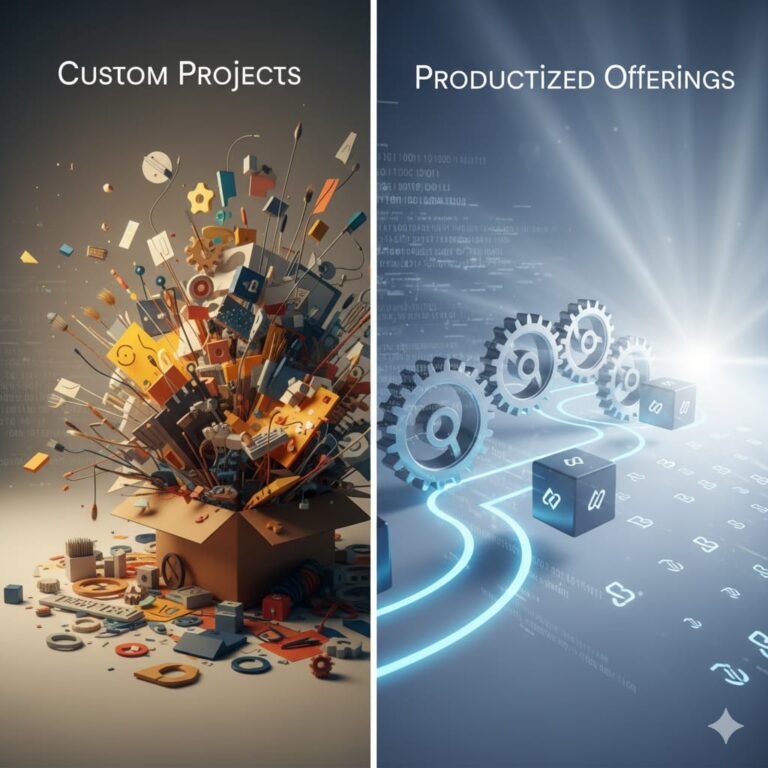
The difference between effort-driven growth and system-driven growth can be seen clearly when they are placed side by side:
| Aspect | Effort-Led Growth Model | System-Led Sustainable Growth Model |
| Planning horizon | Short cycles driven by targets and campaigns | Structured roadmaps that connect experiments, learning, and long-term goals |
| Daily work | Frequent fire-fighting, manual tracking, and ad-hoc decisions | Repeatable workflows with clear owners, SLAs, and automated triggers |
| Data usage | Isolated dashboards, reporting after the fact | Integrated analytics that show how actions affect pipeline and retention |
| Team experience | High stress, unclear priorities, overtime before each milestone | Steady pace, clear focus, and room for improvement rather than constant urgency |
| Customer outcomes | Inconsistent experience and fragmented communication | Consistent touchpoints, stronger onboarding, and higher lifetime value |
In the effort-led column, growth depends heavily on people working harder. In the system-led column, growth comes from how well the machine is built and maintained. Sustainable business growth requires the second model.
The Rapid Neuron Approach To Sustainable Systems.
Rapid Neuron works with startups and growth-stage companies that want to shift from reactive growth to a structured, system-led approach. The process starts with diagnosing the revenue engine, how leads are generated, qualified, converted, and retained. From that insight, a growth architecture is designed with documented processes, automation, and aligned reporting. GA4 is configured to track meaningful events across the journey, and HubSpot becomes the centralized system for lifecycle stages, contacts, and deals. Paid channels are connected, so campaigns can be measured by pipeline and revenue, not only clicks. Once the system is live, Rapid Neuron helps automate follow-ups, routing, lifecycle messaging, and customer signals. This creates a scalable revenue system where growth improves through clarity and structure, not increasing manual work. You can learn more about this approach on the Rapid Neuron growth consulting services page.
Common Patterns That Break Sustainability.

Many companies invest heavily in growth but still struggle to generate predictable results. The challenges often start with fragmented reporting, where teams track metrics separately and lack a unified view of performance. Campaigns are launched faster than operational capacity allows, resulting in inconsistent follow-ups and missed opportunities. Retention is also treated as an isolated function instead of a core element of the growth system. Another common issue is experimentation without structured tests run without a clear hypothesis, timeframe, or definition of success. Teams attempt new channels or messaging, watch short-term numbers, and move on without documenting insights or understanding customer behavior. This creates the impression that many strategies have been tested while key learnings remain unclear. Sustainable business growth requires structured experimentation, clear success criteria, and a shared reporting framework so learning compounds rather than resets with every new initiative.
Designing Systems That Avoid Burnout.

Systems that support sustainable business growth are designed to protect both performance and people. For example, a clear lead management process means that marketing knows exactly when a prospect should be handed to sales, how that handoff is documented, and when the opportunity returns to nurturing if no decision is made. Sales reps spend less time chasing unclear leads, and marketers gain better feedback about which campaigns are generating a quality pipeline. Automation contributes to this balance. When GA4 events, HubSpot workflows, and ad platform signals are connected, repetitive tasks stop consuming human capacity. Instead of manually exporting lists or reminding teams to follow up, the system triggers actions automatically. This doesn’t remove the need for judgment or creativity. It simply ensures that routine steps happen consistently, leaving more energy for strategic work and customer conversations.
External Perspectives On Sustainable, System-Led Growth.
The importance of balancing short-term performance with long-term system health is echoed by many industry leaders. For example, HubSpot’s article on advertising metrics for sustainable business growth explains how teams should move beyond a single metric like ROAS and evaluate campaigns using a broader framework that supports future demand, not just immediate returns. Similarly, broader research on sustainable growth practices highlights how companies that rely on disciplined processes and long-term measurement tend to outperform those that focus only on aggressive expansion. These perspectives reinforce the idea that sustainable business growth is less about individual tactics and more about how the entire system is managed over time.
How To Start Building Systems For Sustainable Growth?

Teams that want to move toward sustainable business growth do not need to rebuild everything at once. A practical starting point is to map the current customer journey from first touch to renewal and identify where information is lost or where manual effort is unusually high. Once these gaps are visible, leaders can decide which parts of the journey should be standardized, automated, or measured differently. From there, it becomes easier to define a short list of system improvements. This might include restructuring lifecycle stages in HubSpot, unifying naming conventions across campaigns, or creating a shared operating cadence between marketing, sales, and success. Each improvement should be small enough to implement quickly but significant enough to reduce friction or increase clarity. Over a few quarters, these changes compound into a much more stable growth engine.
Sustainable business growth is best understood as an outcome of good systems. When processes are clear, automation is thoughtfully implemented, and data flows reliably across tools, growth can increase without creating constant stress. When systems are weak, even impressive revenue spikes tend to be followed by operational strain, inconsistent customer experiences, and unpredictable results. Companies that want to strengthen their systems can begin with a focused review of their growth engine and a plan for integrating tracking, automation, and governance. If you’re exploring how to design a more durable revenue system, you can learn about Rapid Neuron’s system-led approach on the growth consulting services page, and then compare it with external perspectives such as HubSpot’s work on sustainable advertising metrics for a broader view of best practices. By treating growth as a designed system rather than a sequence of campaigns, organizations give themselves room to scale with consistency, protect their teams from burnout, and build performance that lasts.