
How to Measure ROI from Growth Consulting Engagements
How to Measure ROI from Growth Consulting Engagements
Measuring the ROI of growth consulting requires more than looking at revenue increases or the number of leads generated. Businesses need to understand how improvements in acquisition, lead quality, conversion, activation, and retention contribute to measurable business outcomes.
Understanding how to improve growth marketing ROI starts with identifying the right performance metrics, establishing a baseline, and tracking how strategic changes influence outcomes over time. This case study explores how a SaaS startup used structured experimentation, funnel analysis, and onboarding improvements to build a more predictable growth process.
Background and Early Signals
The startup operated in the SaaS ecosystem, offering a product designed for small and mid-sized service businesses transitioning from manual workflows to automation. Early adopters appreciated the speed and simplicity of the solution, yet the results were inconsistent. Some users activated immediately and became paying accounts, while others dropped off before experiencing value. Lead sources varied, messaging was evolving, and although the product had potential, predictable traction remained out of reach. The challenge was alignment. The team needed a clear understanding of who the product served best, which messages resonated, and what blocked users after sign-up.
Before evaluating the impact of any growth initiative, businesses need a clear baseline. This includes tracking acquisition sources, sign-up rates, activation, conversion to paid accounts, and customer retention. Without these reference points, it becomes difficult to differentiate genuine improvements from temporary increases in activity or traffic.
If your business is experiencing similar challenges with inconsistent lead flow or stalled growth, read our guide on 7 signs it’s time to hire business growth consulting firms.
The Turning Point: Using a Lean Growth Approach
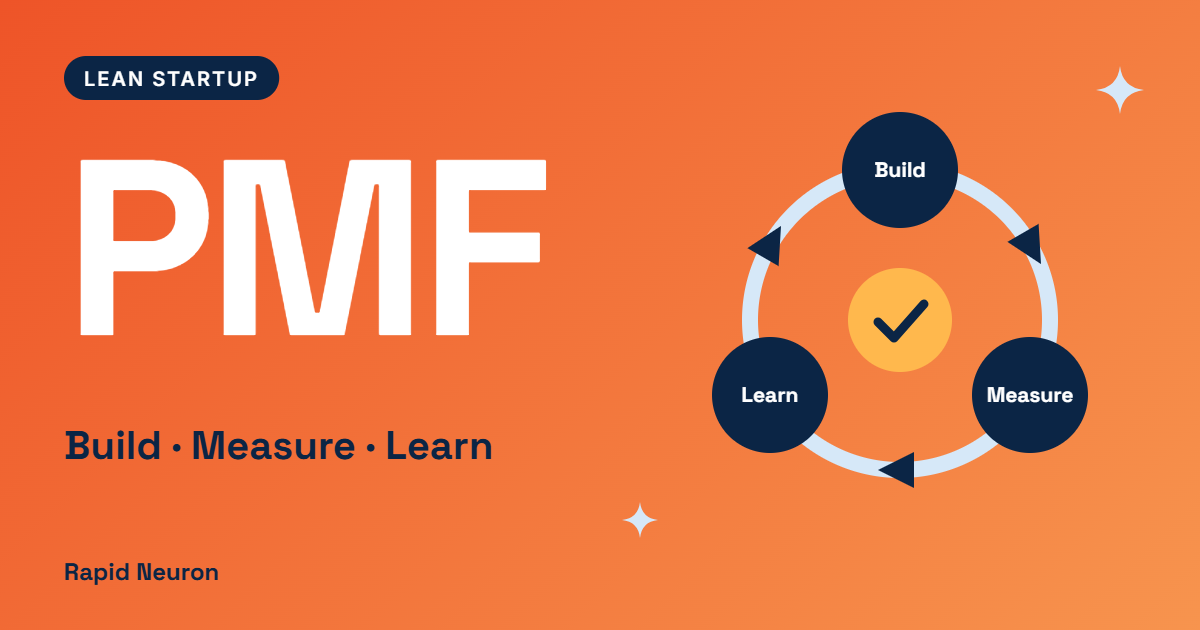
The shift happened when the team stopped experimenting broadly and instead applied a structured, lean startup growth strategy. The objective wasn’t to generate more activity; it was to understand what was working, why it was working, and how progress could become predictable. The process unfolded in deliberate stages.
A structured growth approach also makes performance easier to evaluate. Instead of measuring success through campaign activity alone, businesses can assess whether each initiative improves a specific stage of the customer journey. This creates a transparent connection between strategic decisions, operational improvements, and business performance.
Gaining Clarity Through Diagnosis
Key Metrics to Track During Growth Diagnosis
|
|---|
The metrics selected should reflect the business model, available tracking data, and growth objectives.
The first stage was building visibility into user behavior. Until this point, the team had traffic, sign-ups, and early usage, but no clear understanding of where momentum was accelerating or breaking down. With analytics in place, including GA4 event tracking and HubSpot lifecycle reporting, patterns finally became visible. Funnel drop-offs, audience intent, signal strength, and onboarding friction were no longer assumptions; they were measurable. If you want a structured way to evaluate whether your funnel and messaging are aligned for scalable growth, our article on The 5 Phases of a Scalable Startup Growth Strategy offers a practical framework to compare against.
Validating Messaging and ICP Alignment
With visibility established, attention shifted to refining messaging and audience alignment. Instead of spreading efforts across multiple channels or campaigns, the team tested narratives in environments that delivered fast signal feedback email sequences, landing page variations, and direct outreach. Over time, user responses revealed which value propositions resonated most strongly with the ideal user profile. Messaging evolved from broad descriptions to precise articulation of outcomes, pain points, and use cases the audience cared about. As the narrative strengthened, sign-ups became more intentional.
Messaging improvements should be evaluated through more than engagement metrics. Businesses should also examine whether better audience and message alignment produces more relevant sign-ups, stronger lead qualification, and higher conversion rates. Comparing these indicators before and after an experiment supports determine whether the change is contributing to better growth efficiency.
Improving Activation and Onboarding Experience
Once the right audience and messaging were clear, the next bottleneck became activation. Users were signing up, but not all were reaching meaningful product value. The onboarding experience was simplified, guidance improved, and friction points removed. HubSpot lifecycle tracking helped reveal where users hesitated, abandoned onboarding, or required support. Activation, not acquisition, became the primary success metric during this phase. This shift was critical.
Activation improvements can influence growth ROI by supporting more acquired users reach meaningful product value. To evaluate this, compare the percentage of new sign-ups that complete the activation milestone before and after onboarding changes. Also monitor the time taken to activate and the percentage of users who subsequently convert into paying customers. These indicators help connect onboarding improvements with downstream business performance.
Scaling Only After Repeatability
With ICP clarity, validated messaging, and an improved activation motion, the team finally had something repeatable. Only then did scaling begin not aggressively, but deliberately. Paid campaigns were expanded gradually, messaging frameworks were documented, and new demand channels were explored. Scaling became an extension of what already worked, not a gamble. This approach aligns with research published by Harvard Business Review, which shows that companies with structured learning loops scale more efficiently because decisions compound over time.
Before increasing marketing investment, businesses should evaluate whether the existing acquisition and conversion process is producing sustainable results. Compare customer acquisition costs, conversion rates, customer value, and retention across relevant periods. Scaling a channel makes more sense when its performance is repeatable and the additional investment can be justified by the expected business contribution.
How to Calculate Growth Marketing ROI
Growth marketing ROI measures the financial return generated by marketing and growth investments relative to their cost. A basic calculation is:
ROI = (Return from Investment − Investment Cost) ÷ Investment Cost × 100
For example, if a marketing initiative generates $30,000 in attributable revenue against an investment of $10,000, the illustrative ROI is 200%.
However, revenue attribution should be handled carefully. Businesses need to account for the relevant costs, attribution period, sales cycle, and whether the revenue can reasonably be linked to the initiative.
For growth consulting engagements, the calculation should also consider the cost of consulting, implementation, tools, and any additional resources required to execute the recommendations.
The most useful evaluation combines financial results with operational indicators such as lead quality, conversion rates, acquisition costs, and retention.
Key Metrics Used to Measure ROI in Growth Consulting
Revenue alone cannot explain every improvement generated by a growth initiative. Businesses should evaluate performance across the customer journey to understand where efficiency and conversion are improving.
A. Top-of-Funnel Metrics: Lead Quality and Relevance
Track:
-
Marketing-qualified leads (MQLs)
-
Cost per lead (CPL)
-
Traffic-to-lead conversion rate
-
Lead source performance
These metrics support determine whether acquisition efforts are attracting relevant potential customers.
B. Mid-Funnel Metrics: Qualification and Conversion
Track:
-
MQL-to-SQL conversion rate
-
SQL-to-opportunity conversion rate
-
Lead response time
-
Sales pipeline velocity
These indicators support identify whether leads are progressing through the sales process effectively.
C. Bottom-Funnel Metrics: Revenue and Retention
Track:
-
Customer acquisition cost (CAC)
-
Customer lifetime value (LTV)
-
Revenue generated
-
Customer retention rate
-
Repeat purchase or expansion revenue, where applicable
These metrics support connect growth activities with actual business outcomes.
The right combination depends on the business model, sales cycle, and objectives. A SaaS company may prioritize activation and recurring revenue, while a service business may focus more heavily on qualified opportunities and closed deals.
A Practical ROI Measurement Framework: MQL to SQL to Revenue
A practical growth measurement framework should connect lead generation activities with qualification, conversion, and revenue. Tracking each stage helps businesses identify where growth efforts are producing value and where improvements are needed.
Businesses that require support connecting growth strategy with measurable business outcomes can explore Rapid Neuron’s business growth consulting services to understand its approach to growth priorities, execution, and performance measurement.
A. MQL Stage: Lead Relevance and Intent
Evaluate whether marketing activities attract potential customers who match the intended customer profile. Monitor lead sources, acquisition costs, engagement, and MQL quality.
B. SQL Stage: Qualification Precision and Movement
Assess how effectively qualified leads move into the sales process. Track MQL-to-SQL conversion, qualification criteria, response times, and opportunity creation.
C. Revenue Stage: Conversion and Business Contribution
Measure how many qualified opportunities become paying customers and how much attributable revenue they generate. Compare this contribution against the investment required to acquire and convert those customers.
Reviewing all three stages provides a more complete picture than relying on lead volume or website traffic alone.
Using Quarterly Revenue Growth Planning to Improve ROI
Quarterly revenue growth planning helps businesses turn performance data into transparent priorities for the next reporting period.
At the beginning of each quarter, establish revenue objectives, review acquisition and conversion performance, and identify the biggest bottlenecks in the customer journey.
During the quarter:
-
Review lead quality and acquisition costs.
-
Monitor conversion and pipeline movement.
-
Evaluate campaign and onboarding performance.
-
Identify underperforming activities.
-
Reallocate resources based on measurable evidence.
At the end of the quarter, compare actual performance against the baseline and agreed objectives. Use these findings to determine which initiatives should continue, change, or receive additional investment.
This creates a repeatable measurement cycle instead of treating growth planning as a one-time exercise.
Growth Became Predictable
For businesses evaluating growth performance, this repeatability is also necessary because it creates a consistent basis for comparing acquisition, activation, conversion, and retention across reporting periods.
The Results
Over time, the outcome of this structured approach became visible. Activation rates improved as onboarding friction decreased, and conversions accelerated as messaging aligned with real user priorities. Paid campaigns grew increasingly efficient because targeting and narrative clarity increased user intent. Leads became more qualified, retention improved, and the growth engine began behaving predictably instead of sporadically. There was no single breakthrough. Instead, progress accumulated one validated assumption at a time.
Although the case study does not provide quantified financial returns, the improvements demonstrate why growth performance should be evaluated across the complete customer journey. Better acquisition alignment, activation, conversion, and retention can provide stronger indicators of sustainable growth than campaign activity alone.
Lessons for Founders
 This case demonstrates that early growth does not rely on large budgets or aggressive campaigns. It depends on alignment between the audience, message, and experience. Growth accelerates when uncertainty is replaced with measurable insight, when experiments are structured, and when learning cycles are deliberate rather than reactive. The startup grew not because it did more, but because it did the right things in the right sequence. This approach aligns with broader scaling research documented in resources such as the HubSpot State of Marketing Benchmark Report, which highlights how structured tracking significantly improves decision-making and efficiency.
For founders, the key takeaway is to connect every growth initiative with a measurable objective. Before investing in another campaign or scaling an existing channel, understand its contribution to qualified leads, customer conversion, retention, and revenue. This makes it easier to prioritize resources and evaluate whether growth investments are delivering meaningful business value.
Case Summary: From Uncertain Traction to Structured Growth
|
The case study illustrates how structured diagnosis, validation, optimization, and deliberate scaling can improve the visibility and consistency of business growth.
Frequently Asked Questions
Get Growth Diagnosis
Find out what is holding your growth back and how to fix it.