Case Study: How Growth Suite Consulting Scaled A US SaaS Firm 3× in 12 Months.
A US-based B2B SaaS company used a growth suite consulting model to realign its go-to-market strategy, revenue operations, and execution systems. Within 12 months, the company achieved 3× revenue growth, improved forecast accuracy, and reduced dependency on founder-led decision-making. This case study explains what changed, why previous efforts stalled, and how system-level alignment unlocked sustainable growth.

When SaaS Growth Plateaus Despite Strong Demand?
Many US SaaS companies reach a stage where growth becomes frustratingly inconsistent. Demand exists, inbound leads are steady, and sales teams are active; yet, revenue growth feels harder to predict from quarter to quarter. Leadership teams often respond by increasing spend, hiring faster, or experimenting with new channels. In some cases, this works temporarily. In most cases, it doesn’t. This case study examines how a US-based SaaS firm moved past that plateau by adopting a growth suite consulting approach. Instead of chasing incremental improvements across isolated functions, the company focused on rebuilding how growth worked as a system. The result was not just faster growth, but growth that leadership could finally understand, forecast, and sustain.
Company Background And Market Context.

The company was a B2B SaaS provider selling into mid-market US businesses. Its customers were primarily sales-led organizations with defined buying committees and longer evaluation cycles. The company operated in a competitive US market where acquisition costs were rising, and buyer expectations were increasingly shaped by polished onboarding and clear value articulation. At the start of the engagement, the company had reached a solid revenue base. A mix of inbound demand, outbound sales efforts, and founder-led decision-making had driven growth. Tools such as HubSpot and Salesforce were already in place, but they functioned more as reporting systems than as drivers of execution. Despite healthy activity levels, revenue growth fluctuated significantly. Leadership struggled to answer basic questions with confidence. Which channels were actually driving long-term revenue? Why did conversion rates vary so widely by quarter? Where was the real bottleneck in the funnel? These uncertainties signaled a deeper issue than surface-level performance.
How Growth Suite Consulting Differs From Traditional GTM Agencies?

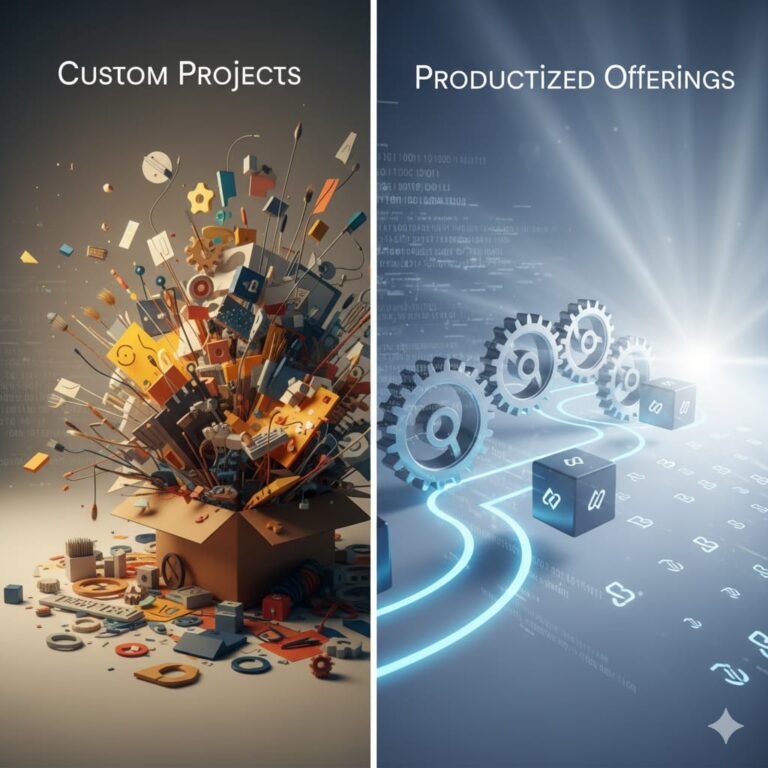
The company’s initial assumption was that growth had slowed because marketing needed optimization. Campaigns were adjusted, messaging was refreshed, and additional spend was allocated to paid acquisition. These efforts produced short-term gains but failed to stabilize performance. Sales initiatives followed a similar pattern. Training sessions improved individual performance, but overall pipeline health remained inconsistent. Deals closed faster in some quarters and stalled in others without a clear explanation. What became increasingly obvious was that growth activity existed, but alignment did not. Marketing, sales, and revenue operations operated with different definitions of success. Data lived across multiple systems, and teams interpreted performance through different lenses. This pattern mirrors what many US SaaS companies experience as they scale. Growth systems that work in early stages often collapse under increased complexity. Rapid Neuron has explored this dynamic in depth in earlier writing on why growth systems break as companies scale, particularly when execution outpaces structure.
Shifting The Focus From Optimization To Alignment.
The turning point came when leadership recognized that optimization alone would not solve the problem. The company didn’t need more tactics. It needed a way to align strategy, execution, and measurement into a single operating model. This realization led to a growth suite consulting engagement with Rapid Neuron. The objective was not to overhaul everything at once, but to understand how growth actually functioned inside the organization and where misalignment created drag. The engagement began with a diagnostic phase focused on reality, not assumptions. How were leads generated and qualified? How did opportunities move through the sales process? Which metrics drove decisions, and which ones created noise? Answering these questions exposed gaps that had been invisible in traditional reporting.
Rebuilding The Growth System.

The first major change was strategic clarity. The company refined its ideal customer profile and clarified which growth motions were scalable within the US market. This immediately reduced wasted effort and helped teams prioritize opportunities aligned with long-term revenue potential. Next came revenue operations alignment. HubSpot and Salesforce were reconfigured to support shared definitions of pipeline stages, attribution, and performance metrics. This created a single source of truth that marketing, sales, and leadership could rely on. With clearer data, execution changed. Marketing campaigns were evaluated based on downstream revenue impact rather than lead volume alone. Sales conversations aligned more closely with buyer intent and readiness. Leadership reviews shifted from explaining variance to making informed decisions. This shift reflects a core principle of growth suite consulting: growth improves when teams operate from shared context rather than isolated metrics.
Execution, Experimentation, And Feedback Loops.

Once alignment was established, the company adopted a more disciplined approach to execution. Instead of running multiple initiatives simultaneously, the team focused on a smaller number of experiments tied directly to revenue outcomes. Creative testing followed clear hypotheses. Funnel adjustments were evaluated based on conversion quality and lifetime value. Performance reviews became more frequent but less chaotic, supported by data that teams trusted. This approach aligns with broader US market research showing that companies outperform peers when execution models evolve alongside strategy. McKinsey’s analysis of growth transformations highlights that alignment between operating models and execution is often the deciding factor in sustained performance. Their insights on growth execution provide useful context here: By embedding learning into execution, the company created momentum that compounded rather than reset.
Measurable Results After 12 Months.
Within 12 months, the impact of the growth suite consulting engagement was clear. Revenue increased approximately threefold compared to the previous year. More importantly, growth became predictable. Forecast accuracy improved significantly. Customer acquisition costs stabilized despite a competitive US market. Sales cycles shortened as lead quality and process clarity improved. Leadership gained confidence in planning because performance data supported decisions. These results were not driven by aggressive spending or rapid headcount expansion. They were the outcome of structural alignment.
How Rapid Neuron Supports Similar US SaaS Teams?

Rapid Neuron works with US-based B2B and SaaS companies that have demand but lack structural clarity. Their growth suite consulting approach integrates strategy, execution, and revenue operations into a cohesive system designed to scale. For teams unsure where misalignment exists, Rapid Neuron offers a Free Growth Audit that evaluates current growth systems across marketing, sales, and operations. This diagnostic helps leadership teams identify constraints before committing additional resources. The Rapid Neuron blog also covers related topics such as sustainable growth and system-level execution, which connect closely to the lessons from this case study.
This case study illustrates a reality many US SaaS leaders face. Growth stalls not because teams lack effort, but because systems fail to scale with complexity. By adopting a growth suite consulting model, this company transformed growth from a reactive process into a structured system. Strategy guided execution. Revenue operations enabled clarity. Data-supported decisions. For US SaaS teams navigating similar plateaus, the lesson is clear. Sustainable growth begins with alignment, not acceleration.
FREQUENTLY ASKED QUESTIONS.