How To Choose A Growth Suite Partner For Your Business?

Growth often feels deceptively simple in the early stages of a company. Teams move fast, decisions are made quickly, and progress feels tangible. But as businesses scale, that simplicity fades. What once felt intuitive becomes fragmented. Teams work harder, but outcomes feel less predictable. At this stage, growth doesn’t slow because of the effort; it slows because systems stop keeping up. This is where many companies begin exploring growth suite consulting. Not because they lack ambition or ideas, but because they need a structure that supports scale. The challenge is not choosing whether to seek help, but choosing the right kind of partner, one that understands how growth actually works inside modern organizations. This article explores how to evaluate a growth suite partner, what separates surface-level consulting from true operational alignment, and how businesses can build a foundation for sustainable growth rather than short-term acceleration.
When Growth Starts Working Against You?
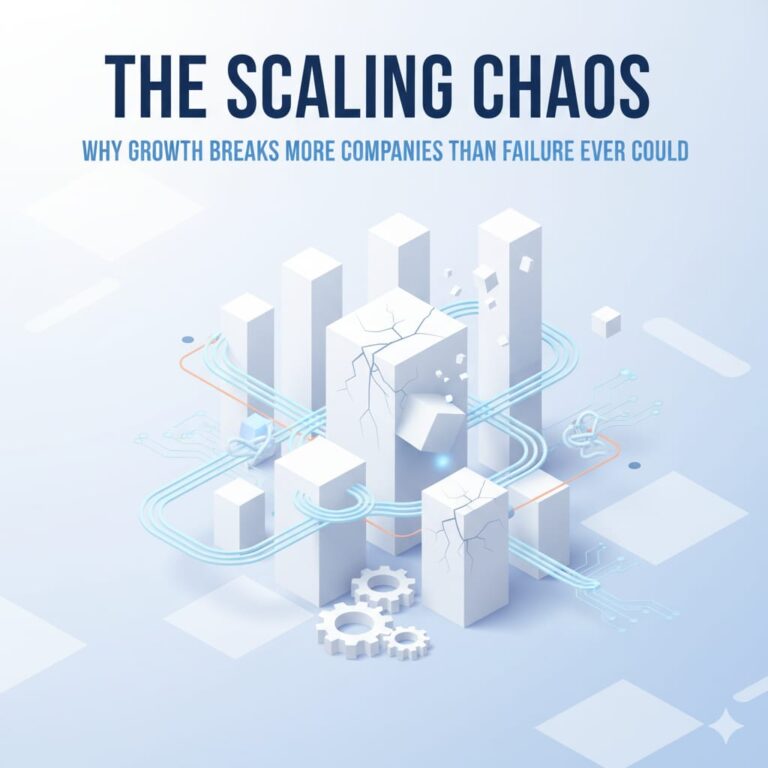
In the early days, growth often feels organic. Teams communicate informally, decisions are fast, and outcomes are visible. As the organization expands, however, complexity increases. Marketing may generate strong demand, sales may push deals forward, and operations may struggle to keep pace. Each function performs well in isolation, yet the business as a whole feels increasingly difficult to manage. This is usually the moment when leaders notice that effort no longer equals impact. Growth becomes unpredictable. Forecasts feel unreliable. Meetings increase, but clarity decreases. The issue is rarely talent or intent. More often, it’s a lack of structural alignment. Without shared systems, metrics, and processes, growth becomes reactive rather than repeatable. This pattern is common enough that we’ve explored it previously on the Rapid Neuron blog, particularly in discussions around why growth systems tend to break as companies scale. Those breakdowns typically don’t happen because teams are underperforming; they happen because the organization outgrows the systems that once supported it.
What Growth Suite Consulting Actually Solves?

Growth Suite Consulting exists to address this exact inflection point. It is all about introducing abstract frameworks. It is about aligning strategy, execution, and operations so growth becomes manageable and measurable. At its core, growth suite consulting helps organizations answer three fundamental questions:
1. Where is growth coming from?
2. What systems support or hinder it?
3. How do teams coordinate around shared outcomes?
Rather than optimizing one function at a time, this approach focuses on how marketing, sales, and revenue operations interact. It recognizes that growth is a system, not a series of disconnected actions. When these elements are aligned, teams gain clarity. Decision-making improves. Resources are allocated more intentionally. Growth becomes less reactive and more deliberate.
Why Alignment Matters More Than Optimization?
Many companies attempt to solve growth challenges by optimizing individual parts of the business. Marketing invests in better campaigns. Sales refines scripts. Operations introduces new tools. While each effort may deliver marginal gains, the overall system remains fragmented. True scalability comes from alignment, not optimization in isolation. When teams operate from shared data and shared objectives, the entire organization moves more efficiently. Revenue becomes easier to forecast. Performance becomes easier to measure. Leaders spend less time reacting and more time guiding strategy. This is why alignment across functions is one of the strongest predictors of sustained growth. Research from McKinsey has consistently shown that companies with strong cross-functional alignment outperform peers by maintaining consistency between strategy and execution. Their analysis highlights that growth initiatives fail not because of ambition, but because operating models fail to support them.
Growth suite consulting applies this thinking by designing systems that connect planning with execution rather than treating them as separate efforts.
How Growth Suite Consulting Works In Practice?
In practice, growth suite consulting begins with understanding how value flows through the organization. This includes examining how prospects become customers, how customers are retained, and how teams coordinate across that journey. Rather than starting with assumptions, a strong partner looks at actual workflows, data visibility, and decision-making patterns. Where are handoffs breaking down? Where does accountability become unclear? Which metrics drive behavior, and which ones create noise? By answering these questions, organizations begin to see growth not as a series of campaigns but as an interconnected system. Improvements made in one area reinforce progress in another. Over time, this creates a rhythm of execution that supports scale rather than undermining it.
The Role Of Revenue Operations In Sustainable Growth.
Revenue operations play a central role in making alignment possible. They act as the connective layer between marketing, sales, and customer success, ensuring that data, processes, and priorities remain consistent. Without this foundation, teams often operate with incomplete information. Metrics tell partial stories. Decisions become reactive. Growth feels uncertain. With strong revenue operations in place, leaders gain clarity. They can identify where performance is strong, where friction exists, and where to invest next. This clarity allows teams to act with confidence rather than guesswork. Growth suite consulting integrates revenue operations into the broader growth strategy rather than treating it as a support function. This integration is often what separates scalable organizations from those that plateau.
How Rapid Neuron Approaches Growth Suite Consulting?

Rapid Neuron approaches growth through a systems-first mindset. Rather than focusing on isolated tactics, their work centers on aligning strategy, execution, and operational clarity across the organization. Their approach begins with understanding how a business actually functions today, how decisions are made, how data flows, and where friction exists. From there, they help teams design structures that support consistent execution and long-term scalability. This includes aligning go-to-market strategy, revenue operations, and performance measurement into a unified model. The goal is not just improvement, but sustainability. For organizations looking to understand where misalignment exists, Rapid Neuron offers a Free Growth Audit. This assessment helps identify structural gaps across strategy, execution, and operations, giving teams a clearer picture of what needs attention before investing further. Their blog also expands on these ideas, including discussions around sustainable growth and operational alignment, which connect closely to the themes explored here.
When Does a Growth Suite Partner Become Necessary?
Growth suite consulting becomes especially valuable when a company reaches a point where effort no longer translates into momentum. Common signs include inconsistent results, internal friction, and a lack of visibility into what’s actually driving performance. At this stage, adding more people or tools often increases complexity rather than clarity. What’s needed instead is a system that brings coherence to decision-making and execution. A strong growth partner helps organizations step back, diagnose root issues, and rebuild alignment in a way that supports long-term progress.
Choosing a growth suite consulting partner is not about outsourcing responsibility. It’s about creating the conditions for sustainable growth by aligning people, processes, and data around a shared direction. When growth is supported by structure, it becomes predictable rather than chaotic. Teams move with confidence. Leaders make informed decisions. Progress compounds instead of stalling. For organizations navigating this stage, investing in alignment is often the most effective path forward.
FREQUENTLY ASKED QUESTIONS