Building A Long-Term Growth Strategy After Seed Funding
Many startups experience momentum immediately after raising seed funding, but few convert that momentum into predictable growth. The shift from experimentation to scalable execution requires structure, measurement, prioritization, and clarity. This article breaks down how funded startups can transition from early experimentation to a long-term startup growth strategy grounded in repeatability, operational discipline, and measurable traction. It also outlines how consulting support can accelerate alignment, speed up execution, and prevent scale-stage inefficiencies.

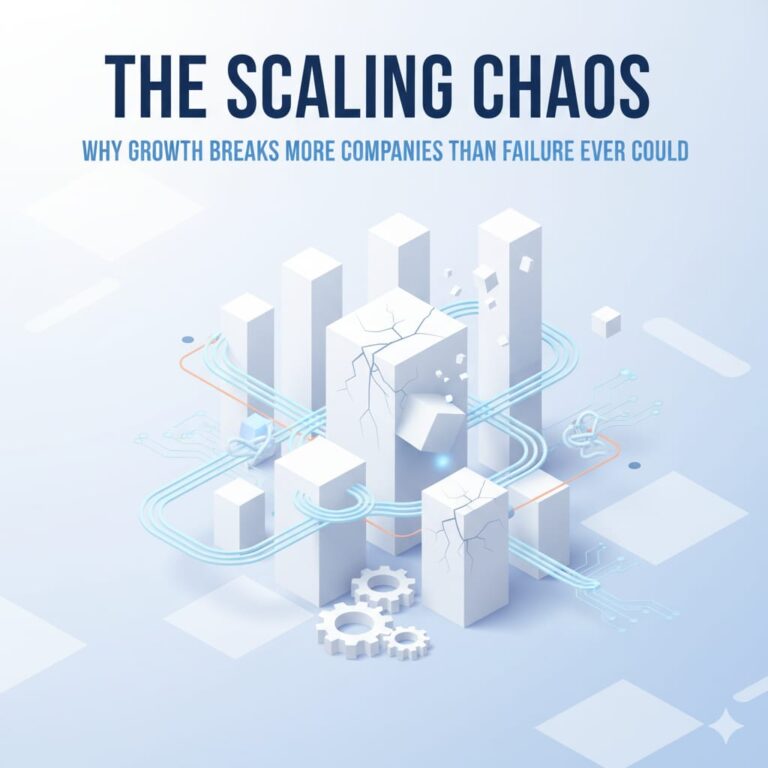
Seed funding creates space for possible new hires, product expansion, channel exploration, and faster decision-making. But it also introduces a new challenge: expectations. Investors anticipate clarity, speed, and measurable forward movement. The team must now prove that early validation can turn into repeatable revenue. This transition is often where momentum stalls. Without a structured foundation, startups risk spreading resources across too many priorities, multiple channels, new features, parallel initiatives, and scattered messaging. A long-term startup growth strategy helps funded teams move from early traction to predictable scale by establishing direction, operational focus, and clear milestones.
Why a Long-Term Strategy Matters After Seed Funding?

Seed-stage experimentation helps teams discover what works. Post-funding execution requires proving that it can work repeatedly, efficiently, and at scale. A long-term strategy bridges that shift. When growth decisions rely on measurable signals rather than assumptions, teams gain confidence in what deserves investment. Instead of scaling activity broadly, the business focuses on strengthening what already demonstrates potential ICP fit, core acquisition channels, onboarding experience, and retention mechanics. This stage is also where accountability becomes essential. Reporting frameworks help investors, founders, and operational teams speak the same language, one built around metrics, progress, and learnings rather than opinions. Resources such as the HubSpot Growth Benchmark Report reinforce how disciplined measurement improves scaling efficiency.
Moving Beyond Early Experiments.
After seed funding, startups often still rely on early decisions, MVP messaging, initial funnels, and channels that produced first conversions. But these early decisions are usually designed for speed, not scale. Refining the growth foundation begins with clarity. The team must re-evaluate the ICP definition, channel performance, product feedback, activation experience, and retention signals. This is a necessary reset before scaling efforts and budget. Once clarity is established, the startup begins grouping activities into structured learning loops. Instead of parallel campaigns and disconnected experimentation, growth becomes a series of deliberate steps: test, measure, refine, optimize, and scale.
This staged approach aligns with the structured methodology behind the Rapid Neuron Growth Marketing, which provides a measurable starting point for long-term strategy building
Strengthening the Core Growth System.

A long-term strategy is a bigger roadmap; it is a system built around consistent measurement and continuous improvement. As clarity increases, the focus shifts to establishing a repeatable acquisition-to-revenue motion. Messaging becomes standardized across touchpoints, onboarding evolves based on behavior rather than assumptions, and lifecycle engagement supports activation and retention. As operational maturity grows, forecasting replaces guesswork. Growth initiatives follow timelines, owned metrics, and expected outcomes. Channels scale gradually rather than aggressively. This mirrors industry analysis from Harvard Business Review, which highlights that high-growth companies execute fewer initiatives with deeper focus, not more initiatives with scattered effort.
Case Snapshot.
| Stage | Focus | Outcome |
| Post-Funding Reset | ICP, messaging, funnel review | Clear direction |
| System Building | Onboarding optimization and CRM tracking | Predictable activation |
| Scaling Phase | Expand proven channels | Sustainable acquisition and revenue flow |
When to Bring in a Consulting Partner?

Many funded startups reach a point where execution speed matters more than learning everything internally. A consulting partner accelerates direction, reduces inefficiency, and brings cross-functional experience into the early scaling stage, especially when the team is still evolving its capabilities. When the goal is faster alignment, faster validation, and faster system building, an external partner prevents costly missteps. Execution becomes grounded in proven frameworks rather than trial-and-error. If you’d like a structured starting point, you can read our case-based guide on The 5 Phases of a Scalable Startup Growth Strategy, which explains how startups move from diagnosis to repeatable, scalable growth.
Seed funding creates opportunity, but a long-term startup growth strategy ensures that opportunity turns into compounding traction. When priorities align with measurable outcomes, when decisions are driven by signal rather than assumption, and when execution follows structured learning cycles, growth becomes predictable rather than reactive. If your team is entering or approaching this transition phase and would benefit from guidance, clarity, or system setup, a Growth Audit can provide a strong starting point to move forward confidently and efficiently